
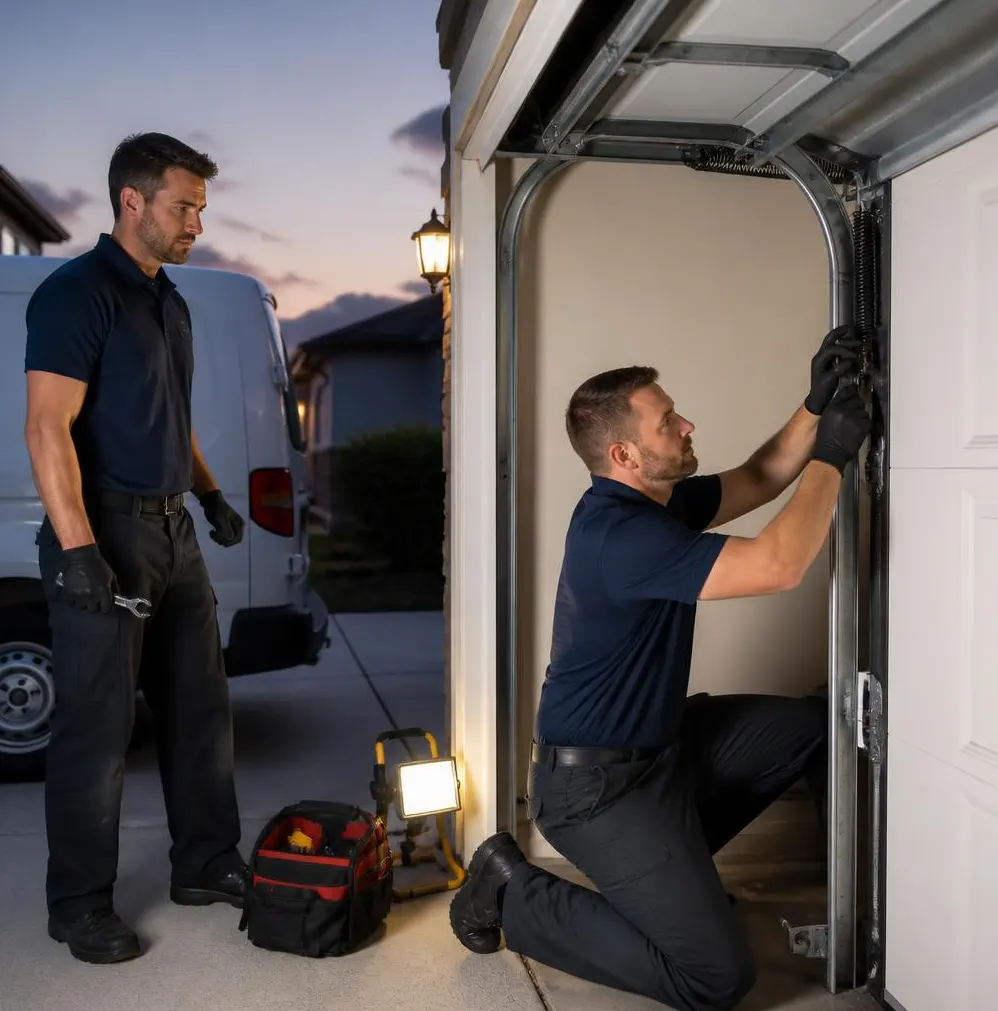
A garage door that reverses before it touches the floor, or won't close at all, isn't a problem that fixes itself over the winter months. Leave it alone through the rest of hurricane season and you're looking at a door that can't seal against wind-driven rain, a house that's easier to break into, and a motor that keeps straining against whatever is actually wrong until something more expensive gives out — a stripped gear, a snapped cable, or a opener board that's seen one too many stall-and-reverse cycles. What starts as a twenty-minute fix in October can turn into a same-week opener replacement by December.
The Symptoms to Pay Attention To
Before getting into causes, it helps to know which version of the problem you have, because it points to a different starting place:
- The door starts down, then reverses back up before it reaches the floor — almost always a safety-sensor or force-setting issue.
- The door won't move at all when you hit the button — could be sensors, power, or a more serious mechanical bind.
- The door closes partway, stutters, then reverses — often a track or roller obstruction, sometimes a balance problem from a weakening spring.
- The door closes fine some days and not others — look at the sensors first, since sun angle, humidity on the lenses, and light rain can intermittently trip them.
Where to Look First: The Safety Sensors
Every opener built in the last few decades has two small sensor eyes mounted a few inches off the floor on either side of the track. If they're misaligned, dirty, or one is blocked, the opener reads it as an obstruction and reverses the door — this is by far the most common reason for a reversing door, and it's the first thing any technician checks.
In this climate, the sensors take more abuse than most homeowners expect. Salt air and humidity leave a film on the lenses, afternoon downpours can splash grit onto them, and a bump from a bike, cooler, or stored patio furniture can knock one a few degrees out of alignment — enough to break the beam without being obvious to the eye. The fix is simple: wipe both lenses clean with a soft cloth, confirm both indicator lights are solid (not blinking), and check that nothing — including a spider web — crosses the beam path. If one sensor's bracket has worked loose, re-securing it and realigning it with the other side often solves the problem outright.
Next: The Opener's Limit and Force Settings
If the sensors check out clean and the door still reverses, the next thing to look at is the opener's internal limit and force settings. These tell the motor how far to travel and how much resistance to tolerate before assuming it's hit an obstruction. Humidity swells wood and composite panels slightly, and seasonal temperature shifts can change how much friction the door generates on its way down — enough to trip force settings that were fine a few months ago.
Adjusting these settings means finding the small dials or digital menu on the opener housing and making small, incremental changes — too much force and the door stops protecting against real obstructions like a foot or a pet. This is one of the more common reasons a door that used to close fine throughout the dry season starts reversing once the humid, rain-heavy months set in.
Then: The Track and Rollers
If sensors and settings aren't the issue, the next stop is the track itself. A bent section, a buildup of salt residue or debris, or rollers that have started to wear or rust can create just enough resistance to trigger a reversal — especially on older steel rollers that haven't been lubricated in a while. Coastal moisture accelerates this kind of wear faster than it would inland, so tracks and rollers on homes near the water tend to need more frequent attention.
The fix ranges from a simple cleaning and lubrication to realigning a track that's been knocked out of position, which is also the underlying cause behind a door that runs off-track entirely. Rollers that are visibly pitted, cracked, or no longer turning freely are a wear item and should be replaced rather than coaxed along.
Finally: Springs and Cables
If everything above checks out and the door still won't close smoothly, the issue is likely with the springs or cables that counterbalance the door's weight. A spring that's losing tension makes the door heavier than the opener expects, so the motor strains, the force sensor trips, and the door reverses as a safety response. A fraying cable can cause the door to hang unevenly, binding in the track and producing the same symptom.
This is also where the risk goes up. A torsion spring under tension and a frayed cable under load are not safe for a homeowner to handle — this is the point in the diagnostic order where it stops being a DIY afternoon and becomes a job for someone with the right tools and training.
When to Call Key Largo Garage Door Service
If you've checked the sensors, cleaned the lenses, and the door still reverses or won't close, it's time to call. We work through this same order on-site — sensors, settings, track and rollers, then springs and cables — so we can tell you exactly what's causing it rather than guessing. If it turns out to be a weak spring or a frayed cable, our Garage Door Spring Repair and Garage Door Cable Repair services get the door back in proper balance and safely operating the same visit. If the track or rollers are the culprit, our Off Track Door Repair handles realignment and worn-part replacement before it turns into a bigger issue heading into storm season.
If your garage door in Key Largo, Tavernier, Islamorada, or anywhere in the Upper Keys is reversing, stalling, or refusing to close, call Key Largo Garage Door Service today and get it fixed before the next round of weather rolls in.