
The Instinct to Treat It Like Ice (and Why That's the Wrong Move)
When a garage door suddenly gets heavy, jerky, or slow to respond, the first thing a lot of homeowners do is treat it like a frozen door up north: pour hot water on the tracks, spray WD-40 everywhere, or just keep muscling the opener button until the motor whines. It's a tempting fix because the symptoms genuinely feel like something is "stuck" or frozen in place. But in Key Largo, there's no ice involved. What's actually gripping the door is humidity, salt air, and moisture swelling — and hosing it down with water or blasting it with the wrong lubricant usually makes things worse by washing out grease or inviting more corrosion.
What a Sluggish Door Actually Looks Like
Before chasing a cause, it helps to know exactly what you're dealing with. Common signs include:
- The door hesitates or stutters partway through opening or closing
- One side moves faster than the other, so the door travels crooked
- A grinding or scraping sound comes from the tracks as it moves
- The opener strains, hums, or stalls before the door finishes its cycle
- The door feels noticeably heavier to lift by hand than it used to
Any one of these on its own might be minor. Several at once usually points to a specific mechanical cause, which is where a technician starts working down the list.
Causes, in the Order a Technician Checks Them
1. Dried-Out or Washed-Out Lubrication
This is the first and easiest thing to rule out. Afternoon downpours and salt-laden humidity strip lubricant off rollers, hinges, and tracks faster than it would wear away in a drier climate. The fix is straightforward: clean off old grease and grit, then apply a silicone-based lubricant made for garage doors — not household oil or WD-40, which attracts dust and breaks down quickly in humid air.
2. Track Alignment and Swelling
Next, a technician checks whether the tracks themselves have shifted or whether the door panels have swollen. Moisture exposure can cause wood-trimmed doors or door jambs to swell slightly, which narrows the gap the door travels through and creates drag. Metal tracks can also loosen from their brackets over time. The fix involves re-leveling the tracks with a level and tightening mounting bolts, or in the case of swelling, trimming or adjusting the frame clearance so the door isn't fighting the opening on every cycle.
3. Rusted or Corroded Rollers and Hinges
Salt air is hard on exposed metal hardware, even away from the coast. Rollers and hinges can develop surface rust that makes them bind instead of rolling smoothly. A technician will inspect each roller and hinge individually — minor rust gets cleaned and lubricated, while pitted or seized rollers typically need replacing since rust-roughened metal won't move freely no matter how much lubricant is applied.
4. Spring Tension Loss
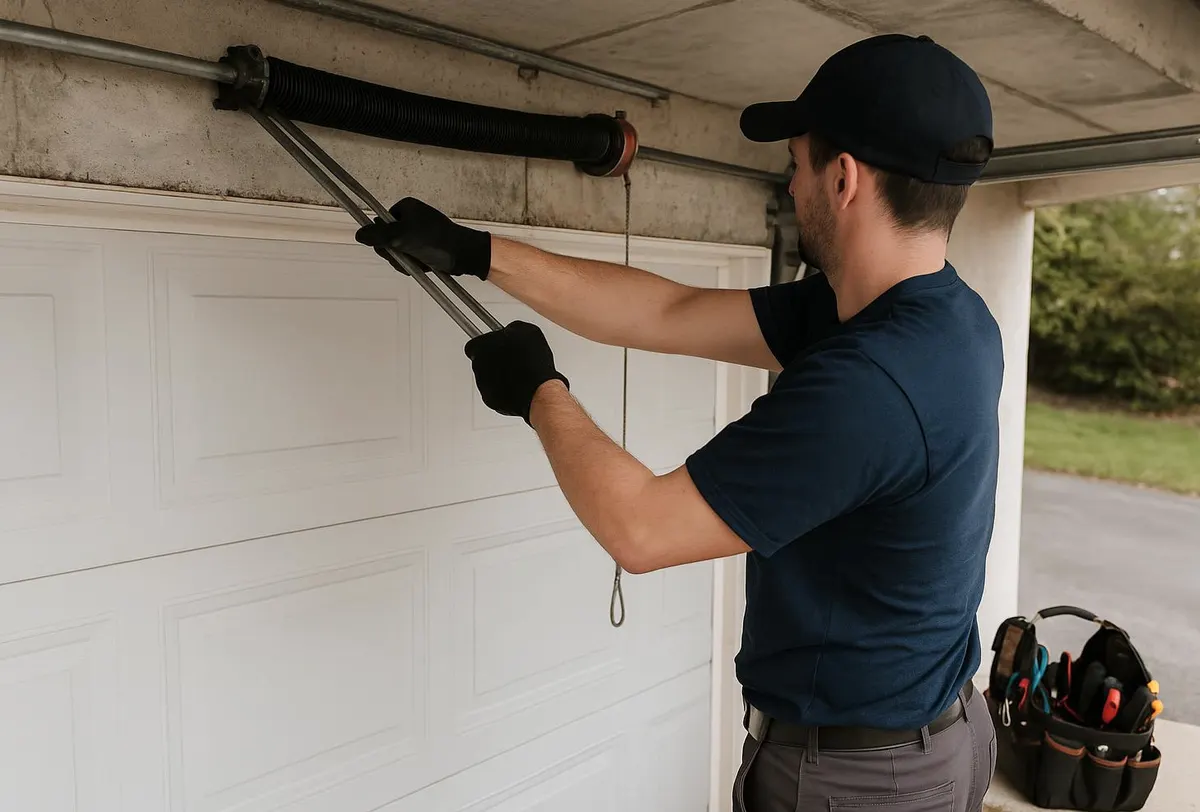
If the door still feels heavy after lubrication and track checks come back clean, spring tension is next. Springs lose a bit of tension over time, and that loss is more noticeable in a door that's also fighting swelling or corrosion elsewhere. Checking spring tension is not a DIY step — it involves controlled adjustment under load, and it's one of the more common reasons a technician gets called out specifically for garage door spring repair.
5. Opener Settings and Sensor Alignment
Last on the list is the opener itself. If everything mechanical checks out but the door still hesitates or reverses unexpectedly, the opener's force or limit settings may need recalibrating — sometimes because the door frame has shifted slightly from humidity swelling and the sensors are no longer reading it the same way. This is a quick adjustment once the mechanical issues above are resolved.
When to Call Key Largo Garage Door Service
If lubrication alone doesn't fix the drag, or if you're hearing grinding alongside visible rust on the rollers, it's time to call in a technician rather than keep working through it by hand. Key Largo Garage Door Service handles this kind of diagnostic work regularly across the Upper Keys, and two services come up most often for sluggish doors: off track door repair for alignment and track issues, and preventive maintenance & tune-up to get ahead of salt-air corrosion before it turns into a bigger repair. A proper tune-up also catches early spring wear before it becomes a safety issue.
If your garage door in Key Largo, FL is dragging, grinding, or just not moving the way it used to, give Key Largo Garage Door Service a call — we'll track down the real cause and get it moving smoothly again.