
The Short Answer
Yes, if your opener doesn't already have one, you should add battery backup. No, it's not legally required almost anywhere. And no, it's not the same thing as the manual release cord you've probably already used during a power outage. Those are three separate facts, and most arguments about this topic happen because someone's mixing them up.
Two Different Kinds of "Backup"
Every garage door opener has a manual release, usually a red cord hanging near the motor unit. Pull it, and the door disconnects from the opener so you can lift it by hand. That's free, it's already installed, and it works the instant the power goes out. No battery required.
Battery backup is different. It's a battery pack, either built into the opener or added as a separate unit, that keeps the opener itself running on electricity when the power is out. With it, your remote, wall button, and safety sensors all keep working normally. Without it, you're back to lifting the door by hand every single time, which gets old fast if you're dealing with short outages during afternoon storms or a longer one after a hurricane.
How It Actually Works
The battery sits inside or next to the opener and charges continuously off household power. When the power cuts out, it switches over automatically, usually within a second or two. Most systems are rated for a limited number of open-close cycles on battery power alone, often somewhere in the range of 10 to 20 cycles, which is plenty to get a car out during an evacuation but not meant to run the door indefinitely for days.
What It Won't Do
- It won't power your garage lights or outlets, just the opener motor and sensors.
- It won't last through an extended multi-day outage without recharging.
- It won't replace a whole-home generator if you're relying on the garage for more than getting the car out.
Is It Actually Required?
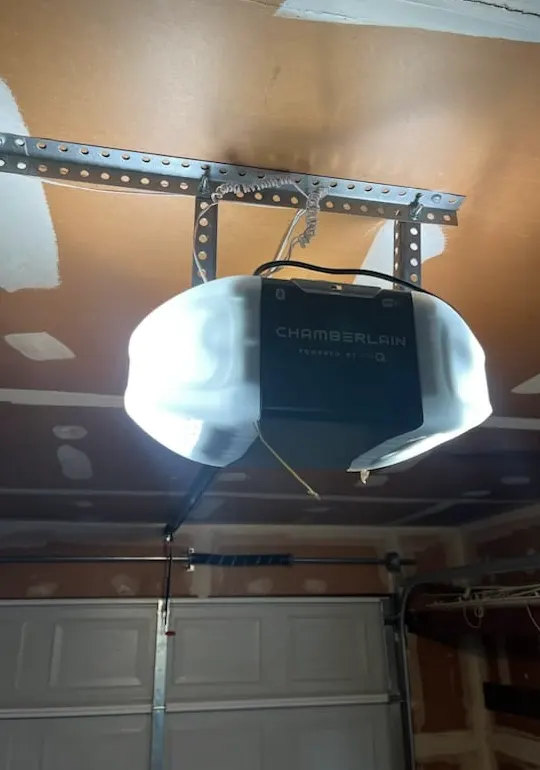
There's no blanket law mandating battery backup on residential garage door openers. What has changed is that most openers manufactured in the last several years come with it built in as a standard safety feature, tied to updated entrapment-protection standards for the industry. If you bought a new opener recently, there's a decent chance you already have one and didn't realize it. If your opener is older, battery backup is usually an add-on kit rather than something baked in from the factory.
Why It Matters More Here Than in a Lot of Places
Hurricane season brings the obvious case: power drops, you need to get vehicles out or secure the garage before wind-load conditions get worse, and you don't want to be wrestling a manual release cord in the rain. But it's the smaller, more frequent outages that make battery backup genuinely useful day to day. Afternoon downpours that trip breakers or cause brief grid blips are common, and a battery backup means you don't notice those at all, the door just keeps working.
One local wrinkle worth knowing: salt air and humidity shorten battery life faster than they would inland. A backup battery that would normally last several years may need replacing sooner here. It's worth testing yours before hurricane season starts each year rather than assuming it's still good.
When to Call Key Largo Garage Door Service
If your opener is older and doesn't have a backup battery, or you're not sure whether the one you have still holds a charge, that's a quick thing for us to check. We handle Garage Door Opener Installation for homeowners upgrading to models with built-in battery backup, and our Preventive Maintenance & Tune-Up service includes testing existing backup systems so you're not finding out they've failed during an actual outage. Both are quick visits that save you a headache later.
If you're in Key Largo, Tavernier, Islamorada, or anywhere else in the Upper Keys and want your opener checked before storm season ramps up, give Key Largo Garage Door Service a call. We'll settle the argument for good.