
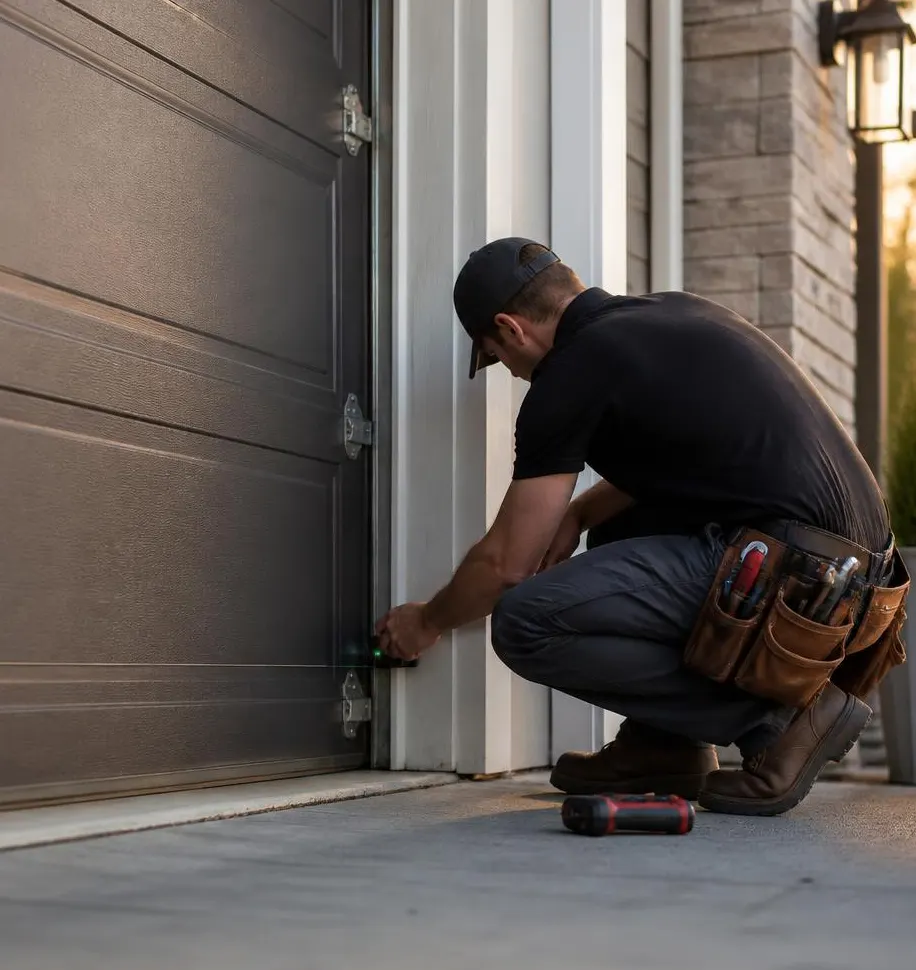
Grinding usually means metal is wearing against metal in the rollers or bearings. Squealing points to dry hinges or a glazed roller. Popping is almost always spring or cable stress. Rattling means something has worked loose. Each one needs a different repair, not just a squirt of lubricant and hope. Here's how to tell them apart, and what actually fixes them.
Grinding: Metal Wearing Against Metal
This is a rough, steady grinding as the door travels, often worse at the same spot in the track every time, sometimes with the door hesitating or jerking.
- Dirty or worn rollers. Salt residue, sand, and old grease build up on rollers, especially near the coast, until there's no cushion left and it's metal on metal. The fix is cleaning the track and swapping worn nylon rollers for sealed ball-bearing rollers, which hold up better in humid air.
- Bent or misaligned track. A technician checks for uneven wear marks or dents along the rail. Fixing it means realigning the track with a level and retightening the brackets, or replacing a damaged section outright.
- Corroded bearings at the header. If the grind is coming from up top rather than the tracks, the bearing plates on the torsion tube have likely rusted from moisture exposure. These get lubricated if caught early, or replaced if they're seized.
Squealing: Something Is Dry
A high-pitched squeal, usually loudest on the first open of the day or right after a storm, then easing up a bit once the door's been moving.
- Dry hinges and rollers. Afternoon downpours followed by hours of heat dry components out fast. The fix is wiping everything down and applying a garage-door-specific lithium or silicone lubricant to hinges, rollers, and tracks. Skip household oil or WD-40 as a long-term fix; it attracts grit.
- Cracked or glazed rollers. If lubrication doesn't quiet things down, the rollers themselves may be worn smooth or cracked and need replacing.
- Opener chain or belt tension. A loose or dry chain-drive sprocket can squeal too. This gets adjusted for tension and lubricated at the sprocket.
Popping: Spring or Cable Stress
A sharp, single pop or bang, often mid-cycle or right as the door reaches the top, sometimes with a visible jerk.
- Torsion spring stress. This is the most common cause. A technician checks the coils for gaps, rust pitting, or uneven winding. Salt air speeds up spring corrosion, which shortens their lifespan compared to inland homes. The only real fix is spring replacement, done by a professional. These springs are under extreme tension and shouldn't be adjusted by hand.
- Cable overlapping on the drum. Next check is the cable winding pattern. If it's bunched or frayed, that's cable repair territory, sometimes a full rewind.
- Panel seams flexing. Humidity swelling can stress panel seams on older steel doors over time, causing a pop as the panel flexes. This calls for replacing the affected panel section rather than the whole door.
Rattling: Something's Loose
A continuous shake or rattle through the whole travel, or a door that rattles in its frame even when closed during windy weather.
- Loose hardware. Vibration plus humidity works bolts and hinges loose over time. The fix is going section by section tightening track brackets, hinge bolts, and roller brackets.
- Worn opener chain or trolley. If the rattle lines up with the opener running, a stretched chain or loose trolley arm is the likely cause, fixed by retensioning or, if it's stretched past adjustment, replacing the opener's drive mechanism.
- Loose wind-load bracing. Doors built to local wind-load standards have reinforcing struts bolted across the panels. If those bolts loosen, the door rattles in gusts even while shut. Re-torquing that hardware is worth doing before hurricane season ramps up, not after.
When to Call In a Technician
A quick lubrication job is fine to try yourself for squealing. But grinding, popping, and rattling tied to springs, cables, or wind bracing are not DIY territory, especially with a torsion spring under load. If you're hearing a pop from the spring area or a cable looks frayed, that's a call for Garage Door Spring Repair or Garage Door Cable Repair before the door fails mid-cycle. If the noise is more of a general looseness or you just want everything checked before storm season, a Preventive Maintenance & Tune-Up covers hardware torque, lubrication, roller condition, and brace inspection in one visit.
If your garage door in Key Largo, Tavernier, Islamorada, or anywhere in the Upper Keys is making noise it didn't used to make, call Key Largo Garage Door Service and we'll track down the source and fix it right the first time.